Packing for Four in Two Suitcases: How We Found Luggage That Actually Keeps Up With Our Family
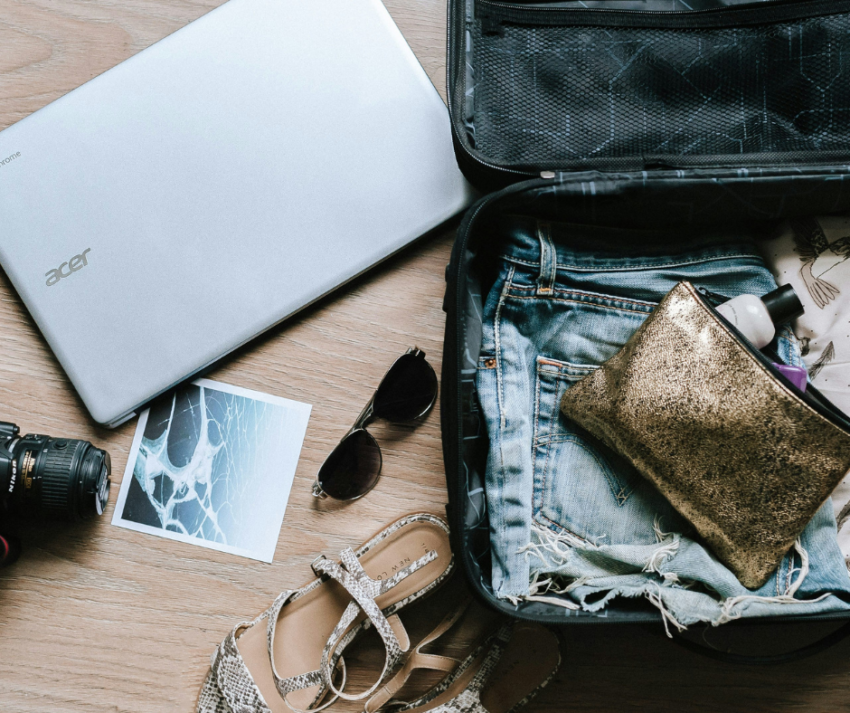
Every summer, our family does the same thing: we pack up, fly back to England for seven weeks, and spend that time hopping between countries across Europe. Multiple flights, train stations,hotel rooms and Airbnbs with too-narrow doorways. And all of it with two kids, a stroller, and whatever four backpacks worth of snacks, tablets, and stuffed animals we’ve decided are “essential” that year.
If you travel with young kids, you already know the real challenge isn’t getting there, it’s what you bring and how you move it. We learned a long time ago that the luggage itself isn’t just an accessory to the trip. It’s either working for you or it’s working against you, one broken wheel and one over-the-shoulder backpack strap at a time.
This past year, we finally sat down and did the research properly. We didn’t want to just buy “nice-looking” suitcases. We wanted something that could survive being a genuine, daily-use tool for a family that travels hard, and that’s how we landed on the LEVEL8 Voyageur series, in both the carry-on and checked sizes.
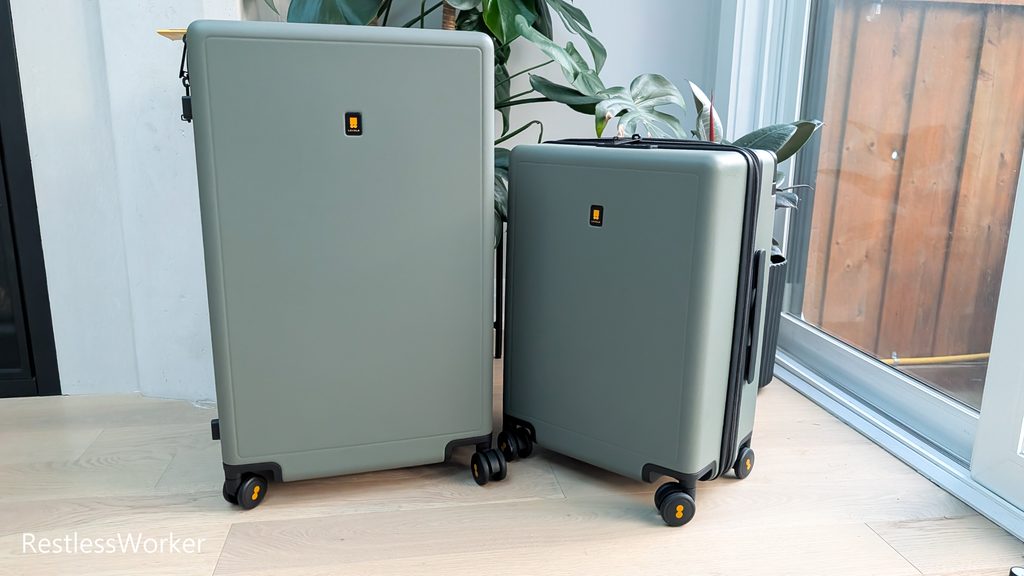
Here’s what we were actually looking for, and why this set of bags checked every box.
The Real Test: Seven Weeks, Multiple Countries, Zero Room for Error
There’s a difference between luggage that performs well for a weekend trip and luggage that performs well for seven weeks of near-constant movement. When you’re doing one long-haul flight, a handful of short-haul European flights, a couple of train journeys, and an unknown number of cobblestone streets in between, your suitcase isn’t just being used, it’s being tested.
We needed bags that could handle repeated handling by baggage crews, get shoved into overhead bins, get dragged over uneven pavement, and still look and function the same on week seven as they did on day one. This is exactly the kind of durability that separates a suitcase that looks premium in a showroom from one that’s actually built for real travel, and it’s the difference we were most focused on getting right before we bought anything
Packing Light Without Packing Less
Anyone who has tried to pack for a family of four knows the tension: you want to travel light, but “light” and “everyone’s stuff” don’t always agree with each other. Between clothes for two kids in two different growth spurts, our own things, and the random extras that always sneak in, maximizing every inch of packing space wasn’t optional for us, it was the whole game.
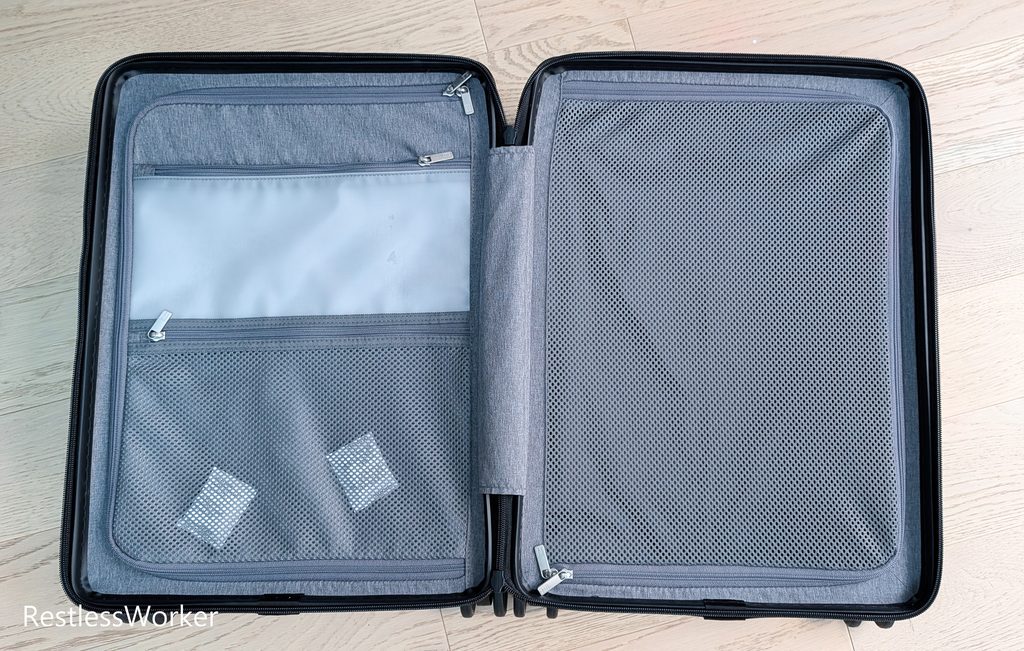
This is where the Voyageur‘s interior design made a real difference. A lot of suitcases waste two to three inches of usable space because of the internal handle bars running through the middle of the case. The Voyageur moves that structure to the edges instead, which means you get a genuinely flat packing surface from wall to wall. No ridges cutting into your folded clothes, no dead zones you can’t actually use.
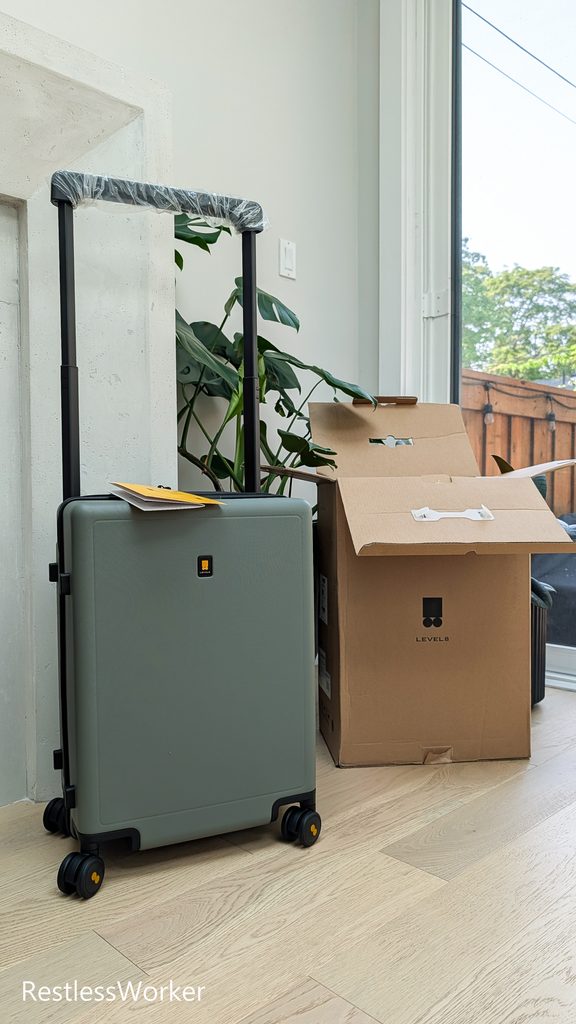
For us, that flat-base interior was the difference between needing a second checked bag and not needing one. Being able to fit what our whole family needs into just one checked bag and one carry-on, per adult, means fewer bags to track, fewer bags to lose, and fewer bags to lug through a train station with a toddler in tow. If you’ve ever tried to pack a carry-on for two weeks (let alone seven), you know that every inch of usable space matters and this is where a lot of luggage design quietly fails you.
Lightweight Enough to Actually Matter
Packing space is only half of the equation, though. The other half is weight and when you’re flying budget or regional carriers around Europe multiple times in one trip, weight limits are unforgiving. We didn’t want a suitcase that was so heavy on its own that it ate into our actual packing allowance before we’d even put a single item inside it.
This is one of the underrated parts of choosing a well-engineered hardside case. The Voyageur is built from Bayer Makrolon® polycarbonate, which gives you a shell that’s tough without being heavy. That balance mattered enormously to us. We didn’t want to choose between “durable” and “light” we needed both, because every extra pound the suitcase itself weighs is a pound we can’t use for actual clothes, shoes, and the emergency supply of snacks that keeps small children functional on a nine-hour travel day.
A Colour You Can Actually Spot From Across the Terminal
This one might sound minor until you’ve stood at a baggage carousel with a jetlagged toddler, watching identical black suitcases go around and around. We specifically wanted a colour that would stand out, something we could spot instantly without having to squint at every bag that rolled past.
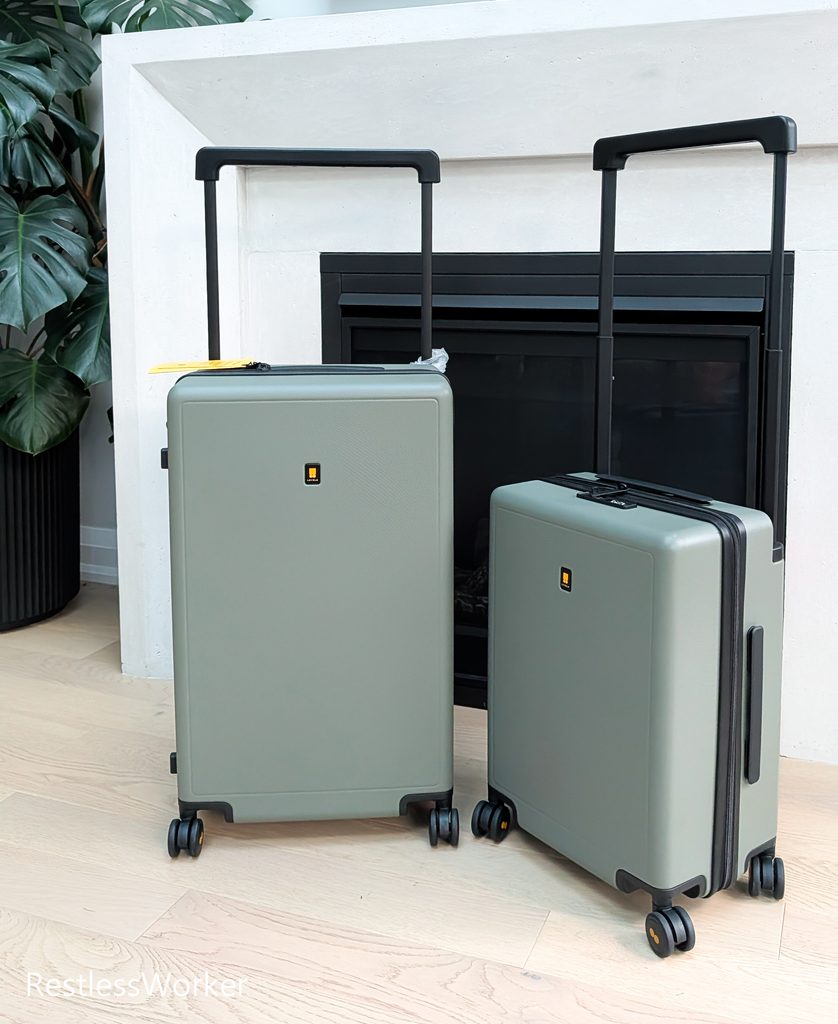
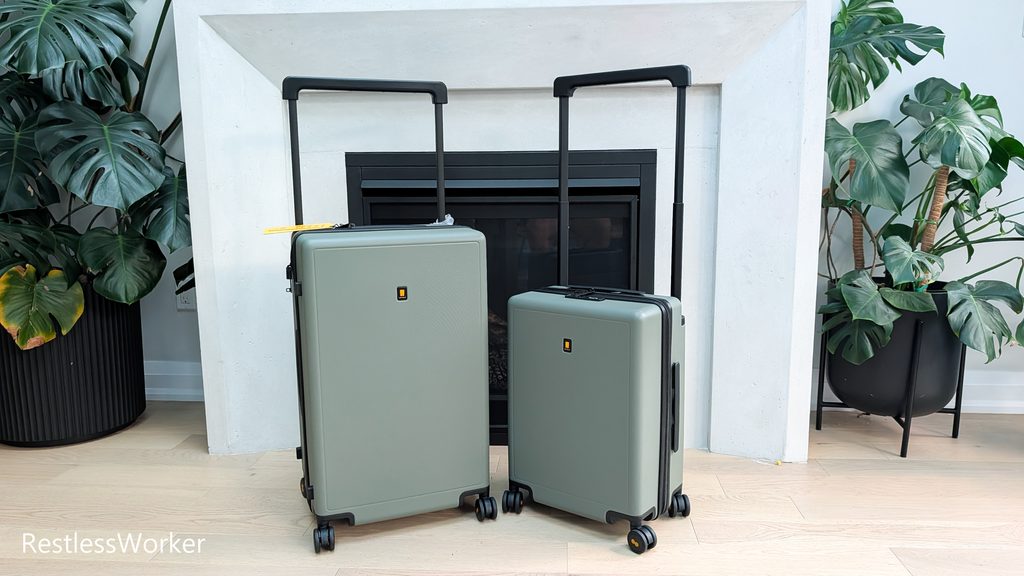
We ended up choosing the Caledon colourway for exactly that reason. It’s a genuinely unique hue that doesn’t get lost in a sea of standard black and navy luggage, which means less time standing at the carousel and more time actually starting the trip. It’s a small thing, but if you travel often enough, small things like this add up to real time saved and real stress avoided.
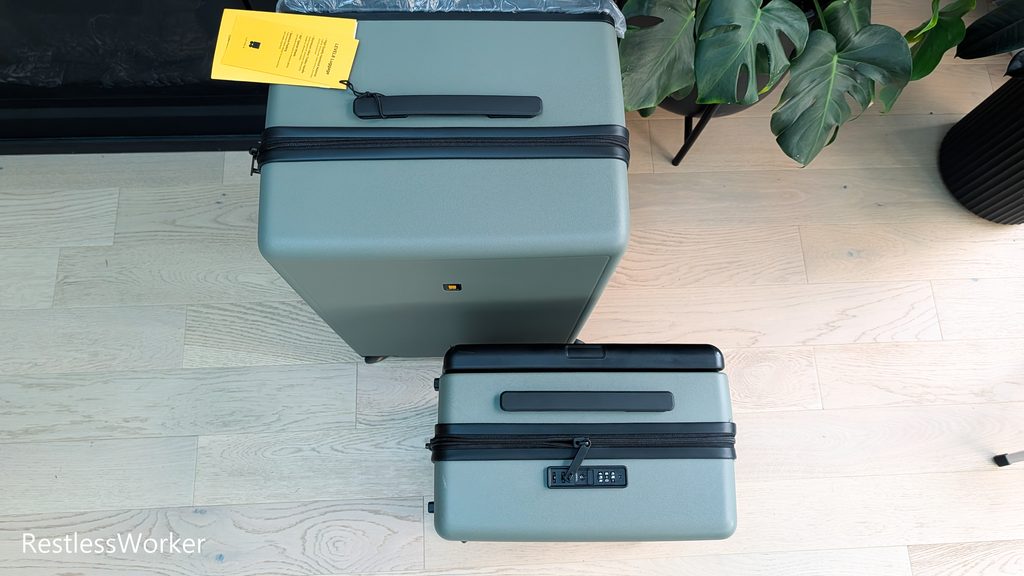
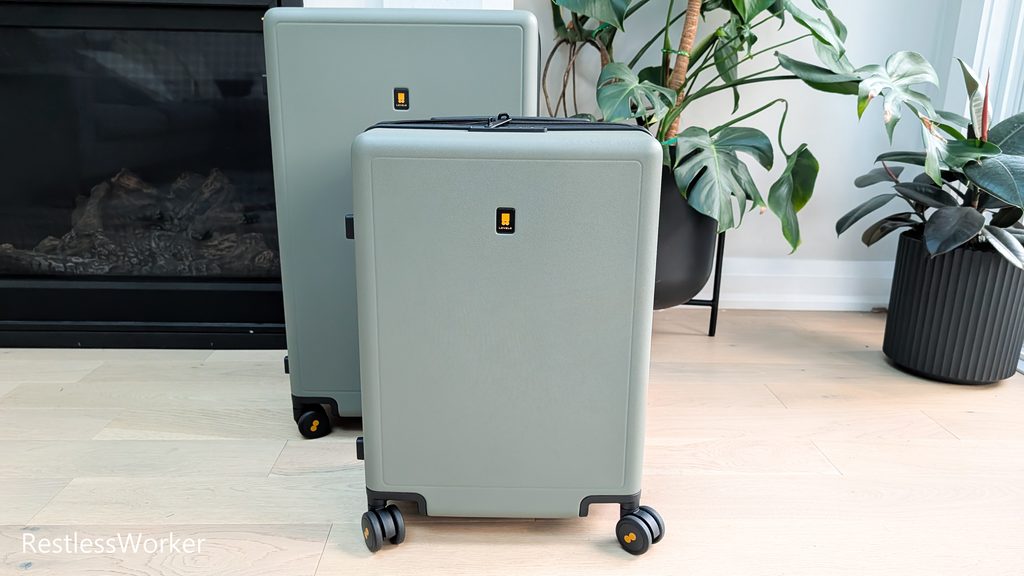
Organized Chaos: Why Compartments and Pockets Actually Matter
Family travel has a way of turning even the most organized packer into someone digging through a suitcase at 6 a.m. looking for one missing sock. We wanted luggage, both the carry-on and the checked bag, that had actual smart interior organization, not just one giant open cavity you toss everything into and hope for the best.
Both the carry-on and checked Voyageur pieces give us dedicated compartments and pockets that let us actually separate things: kids’ clothes in one section, our things in another, chargers and travel documents somewhere we can find them without unpacking the entire bag in an airport hallway. When you’re moving through multiple countries in a matter of weeks, being able to grab exactly what you need without a full excavation project is not a luxury — it’s what keeps the whole trip running smoothly.
Strollers, Backpacks, and the One-Hand Problem
Here’s something that doesn’t come up in most luggage reviews but is a daily reality for traveling parents: you are rarely moving through an airport with two free hands. Between navigating a stroller, keeping track of two kids, and managing four backpacks between us, whichever hand isn’t occupied with a child or a stroller handle needs to be able to steer a suitcase effortlessly, ideally without thinking about it at all.
This is where the Voyageur’s wide-handle design earned its keep almost immediately. Instead of a narrow handle that puts all the steering pressure into one small point, the wider handle spreads that force across the corners of the case, which makes it noticeably more stable and easier to control, even one-handed, even while distracted, even while half-jogging to catch a gate change. Paired with smooth 360-degree spinner wheels, the whole thing glides rather than fights you, which matters enormously when you’re maneuvering around a stroller in a crowded terminal instead of just walking in a straight line down an empty hallway.
It’s a genuinely different experience moving through an airport with a suitcase that goes where you point it versus one you have to wrestle into cooperating.
Built to Actually Stand the Test of Time
We didn’t buy the first suitcase we saw. We did our research, read reviews, compared materials, looked at what actually holds up after repeated travel rather than what just looks good in a product photo. What we kept coming back to was the shell material itself.
The Voyageur’s German-engineered Makrolon® polycarbonate shell isn’t just “hard plastic.” It’s an aerospace-grade material designed to flex and pop back into shape rather than crack or dent permanently under impact, which matters a great deal when your luggage is being tossed, stacked, and handled by baggage crews across multiple countries and multiple airlines in a single trip. Add in reinforced corners and high-precision metal ball bearings in the wheels, and you get a suitcase that’s engineered to survive being used the way we actually use it: constantly, imperfectly, and without any gentle handling requests attached.
That kind of durability is exactly what we were trying to buy in the first place. Not a suitcase that looks premium for one trip, but one that still performs like new after a dozen.
Why the Carry-On and Checked Bag Work Better as a Pair
One thing we didn’t fully appreciate until we started using both pieces together is how much easier travel becomes when your carry-on and checked bag are actually designed as a system rather than two unrelated purchases. The Voyageur carry-on and checked bag share the same wide-handle design, the same wheel quality, and the same interior logic, which means there’s no adjustment period switching between them mid-trip, everything just works the same way, every time.
That consistency matters more than it sounds. When you’re catching a connecting flight with ten minutes to spare, or trying to get two kids and four bags through security without anyone melting down, the last thing you want is to be relearning how a suitcase handles. Having both pieces move, open, and pack the same way means one less thing to think about on travel days that already have plenty to think about.
Why We Landed on LEVEL8
At the end of our research, LEVEL8 stood out as a brand that delivers genuinely high-end design and materials without the price tag of legacy luxury luggage names. The Voyageur collection has also been recognized with a Newsweek Readers’ Choice Award, alongside multiple international design honors, which gave us confidence we weren’t just going on our own gut feeling.
LEVEL8 also backs its products with a lifetime warranty when purchased directly through their site, along with fast delivery and reliable customer support, the kind of assurance that matters when you’re investing in gear you plan to use for years, not just one summer.
For a family that travels the way we do, long stretches, multiple countries, kids, strollers, and all — the Voyageur carry-on and checked set has genuinely changed how smoothly our trips run. It’s not just luggage that looks nice in photos. It’s luggage that’s held up to real use, trip after trip, and shows no signs of slowing down.
Frequently Asked Questions
What makes the LEVEL8 Voyageur good for family travel? The Voyageur series combines a flat, ridge-free interior for maximum packing space, a lightweight but durable Makrolon® polycarbonate shell, a wide ergonomic handle for easier one-handed steering, and smart interior organization — all of which matter for families managing kids, strollers, and multiple bags at once.
Is the LEVEL8 Voyageur suitcase durable enough for frequent international travel? Yes. The shell is made from German-engineered Bayer Makrolon® polycarbonate, an aerospace-grade material designed to flex and recover from impact rather than crack, paired with reinforced corners and high-precision metal ball-bearing wheels built for repeated handling across multiple flights and countries.
How is the Voyageur’s interior different from other suitcases? Most suitcases lose two to three inches of usable packing space to internal handle bars running through the case. The Voyageur relocates that structure to the edges, creating a fully flat packing surface that makes it easier to pack more efficiently, especially useful when trying to pack light for a two-week trip or longer.
Does the wide-handle design actually make a difference? Yes — a wider handle distributes steering force across the corners of the suitcase rather than a single narrow point, resulting in noticeably more stability and easier maneuverability, which is especially helpful when navigating airports one-handed while managing kids or a stroller.
Is LEVEL8 luggage worth it compared to other premium luggage brands? LEVEL8 offers award-winning design, including a Newsweek Readers’ Choice Award for the Voyageur collection and premium materials at a more accessible price point than many legacy luxury luggage brands, backed by a lifetime warranty on direct purchases.